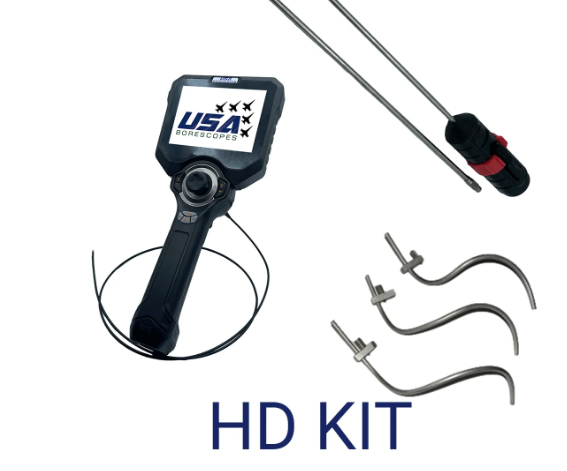
Videoscopes have become a go-to tool in aviation maintenance because they solve a simple problem: the most important surfaces are often the ones you cannot see directly. Internal engine paths, gearbox housings, structural cavities, and tight system runs can hide defects for a long time, especially when access is limited and teardown is expensive.
With a videoscope, technicians can navigate through existing access points and capture clear images and video that support decisions, documentation, and trend monitoring. The best results come from tools that balance access, articulation, lighting control, and reliable recording. Many maintenance teams explore options through USA Borescopes when they need equipment that supports repeatable inspections across common aircraft and helicopter use cases.
Turbine and jet engine inspection applications
Powerplant inspections are one of the most common and high value uses of videoscopes. Engines operate under extreme temperature and mechanical stress, and early indicators of wear can appear internally long before they cause performance changes.
Compressor and turbine sections
Videoscopes are widely used to inspect compressor and turbine stages for defects and distress patterns such as:
- Blade and vane edge nicks, dents, and impact marks
- Tip rub evidence and clearance related wear
- Erosion, pitting, and corrosion, depending on operating environment
- Coating wear, unusual sheen changes, or surface texture shifts
- Deposits or fouling that may affect airflow and efficiency
A big advantage of a videoscope is the ability to view the same area from multiple angles. That matters because a defect can look different depending on lighting and perspective. Capturing both a context view and a close detail view helps reviewers understand location and severity.
Combustor and hot section indicators
Hot section inspections often focus on signs of heat distress and material degradation. Videoscopes can document:
- Cracking or crazing patterns on combustor liners
- Burn patterns that suggest fuel or airflow irregularities
- Coating loss, blistering, or surface roughening
- Localized hot spots and discoloration that may trend over time
- Damage near transitions, seals, or nozzle zones
Because hot section areas can be reflective and uneven, lighting control becomes critical. A usable inspection is one where the technician can reduce glare and capture stable images that show true surface condition rather than washed out highlights.
Helicopter drive system and gearbox use cases
Helicopter inspections add unique access challenges. Drive systems are compact, gearboxes are complex, and many areas are difficult to reach without significant disassembly. Videoscopes allow targeted checks that support reliability and reduce unnecessary removals.
Main gearbox and intermediate gearboxes
Common videoscope applications include inspections of:
- Gear teeth and contact patterns
- Spalling, pitting, scuffing, or abnormal wear indicators
- Evidence of debris, metallic particles, or unusual residue
- Housing condition and surfaces near bearings or seals
- Lubrication related clues such as discoloration or buildup
Even when oil analysis or chip detectors provide a warning, a videoscope can help locate likely sources and clarify whether the issue appears localized or widespread. The ability to capture video is useful here because gear geometry and surface texture can be easier to interpret during slow movement rather than in a single still frame.
Tail rotor drive and couplings
Tail rotor drive areas often involve long runs and constrained routing. Videoscopes can help verify:
- Coupling condition and alignment indicators
- Wear on splines or contact surfaces
- Debris presence in housings
- Condition of hard to see internal features
Articulation and probe control matter in these inspections because the path to the target can involve turns that make it difficult to keep the camera steady. A scope that holds position well reduces the risk of missing subtle wear patterns.
Airframe and structural inspections that benefit from videoscopes
Videoscopes are not only a powerplant tool. They are also valuable for airframe inspections where hidden cavities and limited access can make traditional visual checks incomplete.
Corrosion checks and hidden cavity reviews
Moisture and contaminants can collect in cavities and joints, especially in areas that are not frequently accessed. Videoscopes help inspect:
- Corrosion prone bays and compartments
- Areas with trapped moisture or residue
- Hidden surfaces near joints, doublers, and structural members
- Edges and corners where pitting can start quietly
Capturing consistent images over time supports trending and helps confirm whether corrosion is stable, progressing, or responding to treatment.
Fasteners, joints, and hard-to-reach internal spaces
Sometimes the goal is not to find a dramatic defect, but to confirm that a hard to see area is sound. Videoscopes can assist with:
- Fastener and joint condition checks where access is limited
- Verification of internal bonding or sealant coverage in certain areas
- Inspection of confined spaces after maintenance activity to ensure no foreign objects remain
- Locating small issues early before they become larger structural concerns
In these cases, documentation is often the primary value. Clear evidence reduces debate and supports sign off.
Systems inspections beyond the powerplant
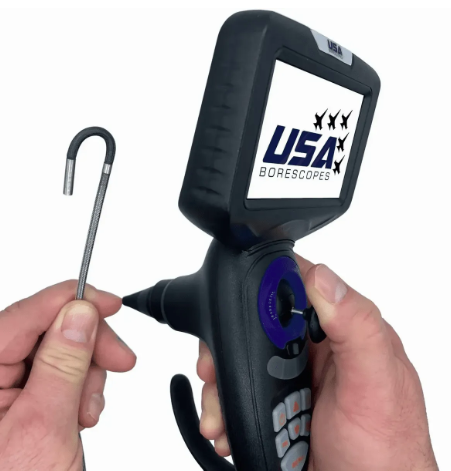
Aviation maintenance includes a wide range of systems where a videoscope can save time and reduce guesswork, especially when line of sight is blocked.
Hydraulics, pneumatics, and ducts
Videoscopes can help with inspections of:
- Ducting and plenums for debris, damage, or loose materials
- Drains and confined runs where fluid contamination is suspected
- Areas where leaks might collect residue but are hard-to-reach directly
- Duct interior condition when performance issues suggest obstruction or deterioration
While these inspections may not require the same level of microscopic detail as a crack check, they still benefit from clear lighting and a stable view to avoid misreading shadows or reflections.
Wiring runs and tight harness areas
Electrical issues can be difficult to trace when wiring runs are packed tightly in constrained spaces. A videoscope can help identify:
- Chafing or abrasion where harnesses contact structure
- Improper routing or clearance issues
- Loose tie downs or missing protection
- Foreign objects that could cause intermittent problems
In practice, this can reduce troubleshooting time because it provides visual confirmation before parts are removed or panels are opened further than necessary.
Turning visuals into decisions that reduce repeat work
A videoscope is only as valuable as the decisions it supports. To reduce repeat inspections and improve consistency, focus on a simple, disciplined approach to capturing evidence:
- Start with a wide orientation view, then capture close detail
- Use short video clips to show angle and location changes
- Keep lighting consistent and avoid overexposure on reflective surfaces
- Label findings clearly by component, station, and viewpoint
- Use reference images of acceptable conditions to reduce false calls
Also watch out for common traps. Glare can look like a crack. A shadow can look like a gouge. A single still image can exaggerate an issue if it is taken at an odd angle. When in doubt, capture multiple angles and a brief clip so the finding can be interpreted accurately.
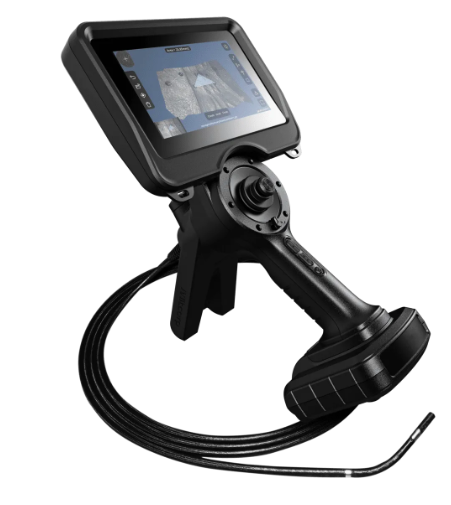
Videoscopes play a major role in modern aircraft and helicopter maintenance because they make internal conditions visible without forcing extensive teardown. From compressor and turbine inspections to helicopter gearboxes, structural cavities, and system runs, videoscopes help teams find early indicators, document condition clearly, and trend changes over time. The result is better decision-making, fewer surprises, and less repeat work.
To explore videoscopes and related inspection solutions for aviation maintenance, visit their products page. To learn more about USA Borescopes or to discuss which inspection approach best fits your applications, contact the team here.
About The Author
The author is an independent aviation maintenance and inspection technology writer with extensive familiarity in remote visual inspection workflows. They focus on practical use cases, documentation quality, and techniques that improve inspection repeatability across mixed fleets and maintenance environments.